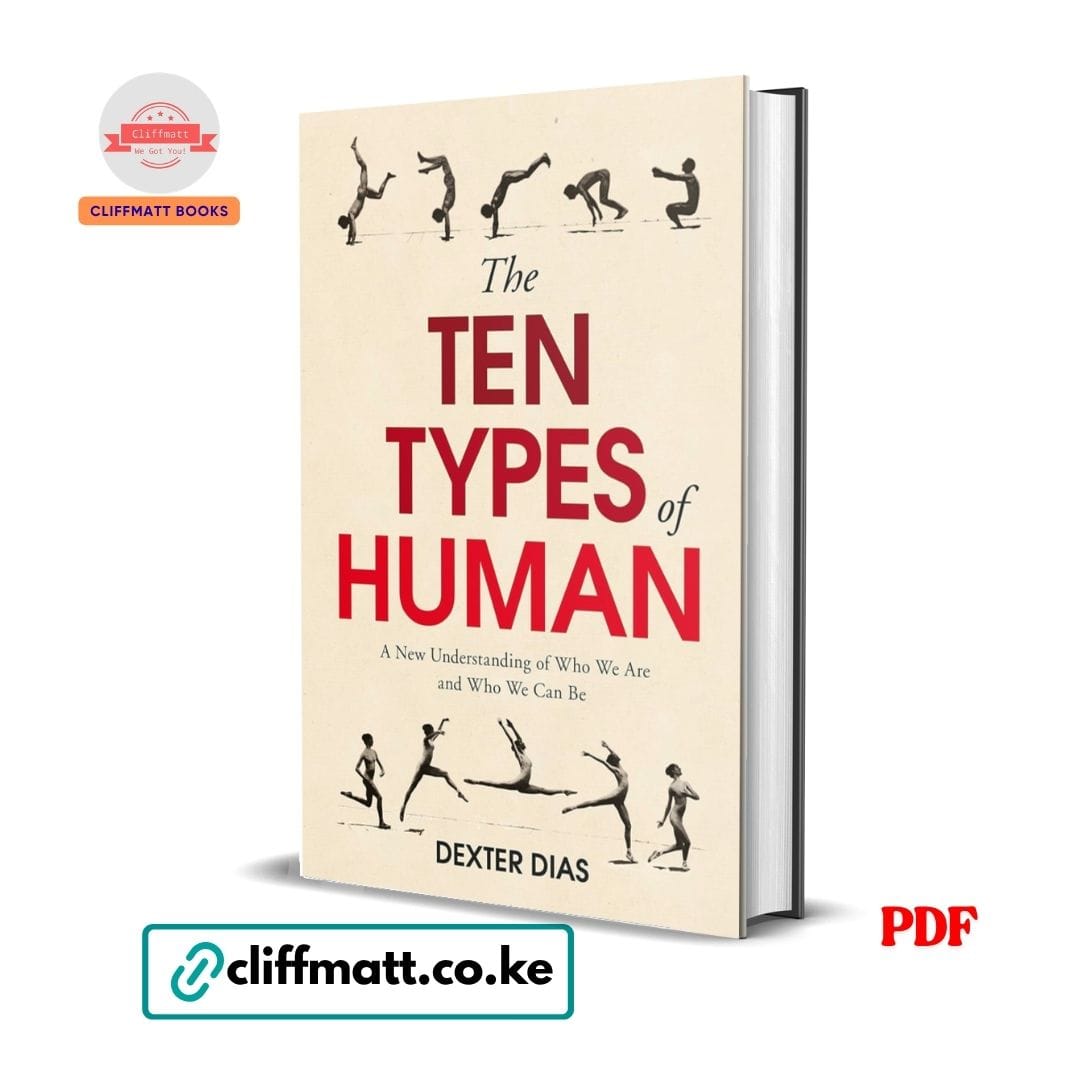
Description What kind of human are you? Not what personality type the specific quiz assigned you. Not what the specific Myers-Briggs result says about your introversion or your intuition. But genuinely — at the specific level of the specific neural architecture that evolution has built into every human being, at the specific level of the specific fundamental capacities that the specific human brain has developed across hundreds of thousands of years of human experience — what kind of human are you? Dexter Dias — barrister, human rights advocate, and the specific person who has spent his professional life in the specific environments (the courtrooms, the refugee camps, the disaster zones, and the specific communities at the most extreme edges of human experience) where the specific most fundamental human capacities are most nakedly visible — spent years investigating this question. Not from an armchair. Not from a laboratory. But from the specific real-world places where the specific most important questions about human nature produce not theoretical answers but specific human lives. What he found was not the specific personality typology that most psychology books offer — the specific description of stable individual differences that distinguish one person from another. What he found was something more universal and more immediately useful: the ten specific fundamental capacities that every human being possesses, that evolution has built into the specific shared human neural architecture, and that each of us activates in the specific different proportions and the specific different circumstances that the specific specific challenges of our specific lives most directly call upon. The Ten Types of Human: A New Understanding of Who We Are and Who We Can Be is his account of those ten capacities — told through the specific most remarkable human stories he encountered in the specific most extreme circumstances he witnessed, grounded in the specific most rigorous neuroscience and evolutionary psychology available, and written with the specific moral seriousness and the specific narrative skill of a human rights barrister who has spent his career at the intersection of the specific worst and the specific best that human beings are capable of producing. At Ksh 100, the most original account of human nature available is here. What This Book Covers: The Foundation — A New Way of Seeing Human Nature: The specific framework — Dias’s particular departure from the specific conventional personality typology approach: rather than describing the specific fixed traits that distinguish people from each other (introversion vs. extroversion, thinking vs. feeling), his framework identifies the specific fundamental capacities that all human beings share and that each person activates in different ways in different circumstances; the particular evolutionary and neuroscientific basis for this approach; why this framework is simultaneously more universal (it applies to every human being rather than sorting them into the specific different categories) and more personally specific (it identifies the specific capacities that any specific person is most or least activating in their specific current circumstances) The specific “at the edge” methodology — how Dias’s specific professional background as a human rights barrister gives him access to the specific human experiences (the specific extreme suffering, the specific extreme courage, the specific extreme moral failure, and the specific extreme moral heroism) that most psychological research cannot reach; why the specific most extreme cases are the specific most revealing cases for the specific most fundamental questions about human nature; the particular Dias conviction that the specific human being at the specific most extreme edge of their experience is the specific human being whose specific most fundamental capacities are the specific most nakedly visible The specific neuroscience foundation — the particular findings of evolutionary psychology, social neuroscience, and the specific brain imaging research that grounds each of the ten types in the specific neural architecture of the specific shared human brain; the particular researchers (including Frans de Waal on empathy, Jonathan Haidt on moral intuition, and the specific other leading figures in the relevant fields) whose specific work most directly informs Dias’s framework The Ten Types — Each Capacity in Full: Type 1 — The Perceiver of Pain (Empathy): The specific empathy capacity — the particular neural mechanism (the specific mirror neuron system, the specific anterior insula, and the specific specific pain matrix that the specific brain activates both when we experience pain and when we observe the specific pain of others) that allows the specific human being to genuinely perceive the specific suffering of another person rather than merely observe it from the outside The specific empathy spectrum — the particular finding that the specific empathy capacity varies considerably across individuals (the specific highly empathic person for whom other people’s pain is almost physically felt, through to the specific low-empathy person for whom the specific other’s suffering produces little automatic emotional response) and that this variation has both genetic and environmental determinants; why neither the specific high-empathy nor the specific low-empathy position on the spectrum is inherently superior — both have the specific advantages and the specific costs that Dias documents through the specific real-world cases The specific empathy activation — how the specific same person can be highly empathic in one context and relatively low-empathy in another; the specific factors (the specific perceived similarity to the person suffering, the specific group membership, the specific moral framing of the specific situation) that most powerfully modulate the specific empathy response; the specific implications for how groups, communities, and societies can be designed to activate rather than suppress the specific empathy capacity that genuine human solidarity most essentially requires The specific Kenyan communal empathy context — the particular Ubuntu philosophy (“I am because we are”) that characterises much of African communal life and that the specific Perceiver of Pain type most directly expresses; why the specific traditional Kenyan communal culture has always understood what the specific individualist Western culture is only recently rediscovering about the specific fundamental human need for genuine empathic connection Type 2 — The Ostraciser (Exclusion): The specific exclusion capacity — the particular human tendency, rooted in the specific evolutionary advantage of maintaining group cohesion by excluding those who violate group norms, to exclude, shun, and ostracise the specific people who are perceived as threatening the specific group’s specific social fabric; the specific neural basis (the specific same brain regions that process physical pain also process social exclusion) for the specific devastating impact of social exclusion on the specific person experiencing it The specific dark side — how the specific exclusion capacity that served the specific evolutionary function of group maintenance becomes the specific most powerful mechanism of the specific most devastating social harm when it is activated by the specific criteria (race, religion, ethnicity, gender, disability) that the specific most morally serious tradition most consistently identifies as the specific most illegitimate bases for exclusion The specific Kenyan ethnic exclusion context — the particular history of ethnic political exclusion in Kenya (the specific Moi era’s ethnic favouritism, the specific post-election violence of 2007–08, and the specific ongoing ethnic political competition that the specific most honest Kenyan political analysis most consistently documents) as the specific most immediately nationally relevant application of the specific Ostraciser type; why understanding this specific type at the specific neural and evolutionary level is the specific most important contribution that Dias’s framework makes to the specific Kenyan political self-understanding Type 3 — The Aggressor (Violence): The specific aggression capacity — the particular neural and hormonal basis of human aggression; the specific conditions (the specific threat to status, the specific threat to loved ones, the specific group conflict framing, and the specific dehumanisation of the specific target) that most consistently activate the specific aggression response; why aggression is not simply a pathological aberration but a specific evolutionarily functional capacity that has become the specific most dangerous human capacity in the specific modern context where the specific weapons available for its expression are the specific most lethal in human history The specific dehumanisation mechanism — how the specific aggression capacity is most consistently activated through the specific moral exclusion of the specific target from the specific category of “people who deserve to be treated as people”; the particular finding that the specific same neural regions that process the specific perception of objects (rather than the specific perception of people) are activated when the specific subject perceives the specific dehumanised other; why the specific language of dehumanisation (the specific rats, the specific cockroaches, the specific vermin that the specific genocidal rhetoric most consistently deploys) is not merely offensive but is the specific neural switch that the specific most extreme violence most consistently requires The specific Kenyan conflict context — the particular relevance to the specific Rwanda genocide (which Dias addresses), the specific Kenyan post-election violence, and the specific specific ethnic rhetoric that the specific Kenyan political culture has most harmfully deployed; why the specific understanding of the specific Aggressor type at the specific neural level is the specific most important single contribution to the specific prevention of the specific political violence that the specific Kenyan political history most urgently needs to prevent from recurring Type 4 — The Tribalist (In-Group Loyalty): The specific tribalism capacity — the particular evolutionary basis of the specific human tendency to identify with specific groups, to feel the specific automatic positive emotions toward in-group members and the specific automatic wariness toward out-group members, and to make the specific moral distinctions between the specific things done to in-group members and the specific same things done to out-group members that the specific most sophisticated moral philosophy consistently struggles to overcome The specific moral circle expansion — how the specific most important moral progress in human history can be described as the specific gradual expansion of the specific moral circle (the specific group whose members are treated as genuinely deserving of full moral consideration) from the specific immediate family, to the specific tribe, to the specific ethnic group, to the specific nation, to the specific species; why this specific expansion is never automatic or inevitable but always requires the specific specific moral effort and the specific specific cultural practices that the specific most morally serious traditions most consistently prescribe The specific Kenyan tribal identity and expansion — how the specific traditional Kenyan tribal identities (the specific Kikuyu, Luo, Kalenjin, Luhya, Kamba, and other specific ethnic communities) function as the specific most powerful social organising principles in the specific Kenyan political and social context; how the specific understanding of the Tribalist type helps Kenyan readers understand their own specific ethnic loyalties not as the specific unique Kenyan pathology that the specific most self-critical Kenyan political discourse sometimes treats them as, but as the specific universal human capacity that the specific Kenyan political culture has activated in the specific most politically consequential way Type 5 — The Shamer (Social Regulation): The specific shame capacity — the particular social regulatory mechanism that the specific human evolutionary tradition developed to enforce the specific group norms on which specific small-group survival most essentially depended; the particular neural basis of the specific shame response (the specific anterior cingulate cortex, the specific amygdala, and the specific specific neural pathway that connects the specific perception of social disapproval to the specific experience of the specific bodily distress that shame most characteristically produces) The specific shame vs. guilt distinction — the particular finding (consistent with Brené Brown’s research in The Gifts of Imperfection) that shame (“I am bad”) and guilt (“I did something bad”) produce the specific different behavioural responses: guilt consistently motivating the specific repair of the specific harm done, while shame consistently motivating the specific withdrawal, the specific denial, or the specific aggression that protects the specific shamed self from the specific further exposure that the specific acknowledgement of the harm most requires The specific Kenyan honour culture context — the particular role of shame and honour in the specific Kenyan communal culture; how the specific honour and shame dynamics of traditional Kenyan communities both perform the specific essential social regulatory function that all communities require and produce the specific specific harms (the specific covering of wrongdoing, the specific silencing of abuse victims, and the specific social pressure that prevents the specific honest acknowledgement of the specific specific failures) that the specific most morally honest engagement with this tradition most urgently requires Type 6 — The Beholder (Beauty and the Sacred): The specific aesthetic and sacred capacity — the particular human tendency to perceive certain objects, experiences, and people as possessing a quality of significance or beauty that transcends their specific material properties; the specific neural correlates of the specific aesthetic experience (the specific reward pathways, the specific default mode network) that activate during the specific encounter with the specific beautiful; why the specific capacity to be moved by beauty — whether natural, artistic, or sacred — is not a luxury of the specific comfortable life but the specific most distinctively human capacity available The specific sacred and spiritual dimension — how the specific Beholder type encompasses not just the specific aesthetic response but the specific sacred perception that most human beings, in most cultures, at most times, have experienced in the specific encounter with the specific natural world, the specific community of worship, or the specific moments of specific profound personal significance; the particular neuroscientific literature on the specific “peak experience,” the specific “awe,” and the specific “transcendence” that the specific most consistent human religious and aesthetic traditions have always sought to cultivate The specific Kenyan spiritual and aesthetic context — the particular richness of the specific Kenyan aesthetic and spiritual tradition (the specific communal music, the specific visual art, the specific ritual ceremony, and the specific specific relationship with the specific natural landscape that the specific Kenyan traditional cultures have always most deeply valued) as the specific most immediately Kenyan expression of the specific Beholder capacity Type 7 — The Defender (Protection of Loved Ones): The specific protective capacity — the particular neural and hormonal basis of the specific human tendency to experience the specific threat to loved ones as more activating than the specific equivalent threat to the self; the specific findings that show that the specific protective response to threat against children, partners, and close community members activates the specific specific neural pathways that the specific equivalent threat to the self does not; the specific evolutionary logic (the specific reproductive investment in children, the specific reciprocal altruism of committed relationships) that explains the specific asymmetry The specific courage under fire — Dias’s particular real-world cases of the specific people who have demonstrated the specific most extraordinary courage in the specific defence of others while being unable to demonstrate the specific same courage in the specific defence of themselves; the particular insight this produces about the specific relationship between love and courage; why the specific person who would not fight for themselves will fight for their child is not inconsistent but is expressing the specific most fundamental human motivational hierarchy Type 8 — The Nurturer (Care and Compassion): The specific nurturing capacity — the particular oxytocin-mediated, vagal-nerve-linked neural system that the specific human brain has developed for the specific care of the specific vulnerable; how the specific nurturing response to the specific infant, the specific sick, the specific elderly, and the specific specifically helpless activates the specific specific neural pathways and the specific specific hormonal systems that together produce the specific most distinctively prosocial human behaviour available The specific compassion fatigue — the particular finding that the specific high-nurturing person is the specific most vulnerable to the specific specific depletion that sustained, intensive caregiving most consistently produces; the particular relevance to the specific Kenyan nursing and healthcare professional who is daily confronted with the specific most intensive version of the specific nurturing demand; the specific practices that sustain the specific nurturing capacity across the specific career-long caregiving trajectory Type 9 — The Rescuer (Altruism at Cost): The specific altruistic rescue capacity — the particular most extraordinary and the specific most philosophically challenging of the ten types: the specific human being who risks their specific own life or their specific own welfare to save the specific specific stranger to whom they have no prior obligation and from whom they expect no specific reward; the specific cases (the specific Holocaust rescuers, the specific disaster first responders, the specific ordinary people who have jumped into rivers, run into burning buildings, and shielded strangers from bullets) that Dias uses to examine the specific neural, psychological, and moral basis of the specific most extreme altruism available The specific neural basis of altruistic rescue — the particular finding that the specific most consistent rescuers are not the specific most fearless people but the specific people whose specific automatic response to the specific perception of another person in danger most rapidly and most powerfully overrides the specific self-protective impulse; the specific amygdala differences, the specific empathy network activation patterns, and the specific other neural characteristics that the specific research on rescuers most consistently identifies The specific Kenyan rescuer tradition — the particular specific Kenyan stories of the specific ordinary people who have performed the specific extraordinary altruistic acts in the specific specific Kenyan contexts of the specific 2007–08 post-election violence (the specific specific individuals who sheltered specific neighbours of the specific other ethnic group at the specific specific risk of their own lives) and other specific Kenyan moments of specific communal crisis; why the specific Rescuer type is not the specific exception to the specific Kenyan character but the specific most profound expression of it Type 10 — The Last Type — The Meaning Maker: The specific meaning-making capacity — the particular most uniquely human of the ten types: the specific capacity to find, create, and sustain the specific meaning that makes the specific specific suffering, the specific specific sacrifice, and the specific specific ordinary difficulty of the specific human life not merely endurable but genuinely worthwhile; the specific neural and psychological basis of the specific meaning-making capacity; why the specific loss of meaning — not the specific loss of comfort, not the specific loss of material goods, and not the specific loss of safety — is the specific most consistently devastating loss available to the specific human being Viktor Frankl and the meaning imperative — Dias’s engagement with the specific most important body of psychological thought about human meaning-making (Frankl’s logotherapy, developed in the specific Nazi concentration camps, which identified the specific capacity to find meaning in the specific most extreme suffering as the specific most powerful predictor of survival); why the specific Meaning Maker type is the specific culmination of the entire framework: the specific capacity that integrates all nine previous types into the specific coherent human being who is not merely surviving but genuinely living The Framework Applied — What It Means for How We Live: The specific personal application — how to identify which of the ten types you most naturally activate in the specific circumstances of your specific life; why this knowledge is not merely intellectually interesting but practically useful for understanding the specific patterns of your specific relationships, your specific professional performance, and your specific specific responses to the specific specific challenges that your specific life most consistently presents The specific relational application — how understanding the specific type activations of the specific people you most closely share your life with produces the specific most practically useful interpersonal understanding available; why the specific conflict that most persistently recurs in any specific relationship is almost always the specific conflict between the specific different type activations of the specific people in it The specific societal application — how the specific ten types framework illuminates the specific most important social and political challenges that the specific Kenyan and the specific global moment most urgently faces; the particular application to the specific ethnic conflict, the specific political exclusion, the specific compassion fatigue of the specific healthcare system, and the specific specific need for the specific Meaning Maker capacity in the specific communities navigating the specific most extreme versions of the specific specific challenges that the specific modern world most consistently produces Why Kenyan Readers Are Buying This Book: Kenya’s specific moment — the specific intersection of the specific ethnic political history, the specific rapid social and economic change, the specific traditional communal values, and the specific specific challenges of the specific modern world — is precisely the specific moment when the specific most fundamental questions about human nature (who are we, why do we do what we do, and who can we become?) are most urgently relevant. The Ten Types of Human addresses those questions with the specific combination of neuroscientific rigor, real-world human rights experience, and moral seriousness that the specific most important questions most deserve. It is the specific book that helps every Kenyan reader understand not just themselves but the specific specific people around them — the specific people they love, the specific people they struggle with, and the specific specific society they are building together — at the specific deepest level that the specific most important understanding most requires. At Ksh 100, the most original and most morally serious account of human nature available. Who This Book Is For: Every Kenyan who wants to understand themselves and the specific people around them at the specific deepest level available — not through personality typology but through the specific fundamental human capacities that neuroscience and evolutionary psychology have most carefully documented Kenyan healthcare professionals (nurses, doctors, counsellors, social workers) who want the specific most rigorous and most practically applicable understanding of the specific human nature they encounter daily in the specific most challenging professional contexts available Kenyan leaders, managers, and community builders who want to understand why people behave as they do in the specific high-pressure, high-stakes, and high-conflict situations that genuine leadership most consistently requires navigating Kenyan students of psychology, neuroscience, social work, law, and human rights who want the specific most accessible and most narratively compelling introduction to the specific most important findings in their respective fields available Every reader of Quiet (Cain), The Road to Character (Brooks), The Gifts of Imperfection (Brown), The Organized Mind (Levitin), and The 33 Strategies of War (Greene) who wants the most original and most comprehensively grounded account of the specific fundamental human capacities to complete their human nature and psychology library �� Author: Dexter Dias �� Format: PDF eBook (instant download via WhatsApp or email) �� Price: Ksh 100 only �� Delivery: Instant after M-Pesa payment confirmation �� Order now on cliffmatt.co.ke — Pay via M-Pesa, receive your PDF instantly.
Deskripsi Bahasa Indonesia
Face Serum Dry And Anti-Aging
Rejuvenasi & Pemulihan untuk Kulit Tampak Muda
Seiring bertambahnya usia, kulit membutuhkan nutrisi dan perawatan ekstra untuk mempertahankan kekencangan, kelembapan, dan kilau alaminya. Anti-Aging Face Serum adalah perpaduan mewah minyak botanikal dan butter alami yang diformulasikan untuk meningkatkan elastisitas, mencegah kulit kendur, serta mengurangi garis halus dan kerutan—secara alami.
Diperkaya dengan Minyak Argan, Minyak Jojoba, dan Minyak Kelapa Murni, serum ini merangsang produksi kolagen, mengembalikan kilau alami kulit, serta mengunci kelembapan untuk hidrasi tahan lama. Minyak argan membantu memperbarui sel kulit, menyamarkan kerutan, sementara minyak jojoba memudarkan flek hitam dan meratakan warna kulit. Minyak kelapa murni meresap hingga ke dalam, meningkatkan kelembutan dan menjaga kulit dari paparan lingkungan.
Berbeda dengan produk sintetis yang berisiko mengiritasi kulit, serum alami 100% ini diperkaya dengan minyak esensial Lavender, Rose Geranium, dan Cananga yang menenangkan peradangan, mendukung regenerasi kulit, serta memberikan kelembapan yang tahan lama.
Dengan pemakaian rutin, kulit akan terasa lebih kencang, halus, dan bercahaya, membantu Anda tampil lebih muda secara alami.
Manfaat Utama:
✔ Meningkatkan elastisitas kulit untuk mencegah kulit kendur dan kehilangan kekencangan. ✔ Melembapkan dan menutrisi secara mendalam, mengurangi garis halus dan kerutan. ✔ Kaya antioksidan yang membantu mencegah flek hitam dan melindungi dari kerusakan lingkungan. ✔ Merangsang regenerasi sel kulit untuk kulit sehat dan bercahaya. ✔ Menenangkan dan mengurangi iritasi pada kulit kering atau sensitif. ✔ 100% alami tanpa bahan sintetis atau bahan kimia keras.
Cara Penggunaan:
Bersihkan wajah dan keringkan perlahan.
Teteskan beberapa tetes serum ke ujung jari.
Usapkan ke wajah dan leher dengan gerakan memutar ke atas, terutama di area sekitar mata.
Gunakan pagi dan malam untuk hasil optimal.
Lanjutkan dengan pelembap atau tabir surya (pada pagi hari).
Tips: Serum ini juga bisa digunakan untuk melembapkan rambut dan kulit kepala kering, atau dicampur dengan minyak esensial favorit Anda untuk perawatan kulit yang lebih personal.
Cocok untuk Jenis Kulit:
✔ Kulit Menua & Matang – Menjaga kekencangan dan mengurangi kerutan. ✔ Kulit Kering – Melembapkan secara intensif dan mengembalikan kelembapan. ✔ Kulit Kombinasi – Menyeimbangkan kelembapan sekaligus mencegah kulit kendur. ✔ Kulit Sensitif – Menenangkan iritasi dengan bahan-bahan alami yang lembut.
Jika Anda mencari solusi anti-aging alami yang efektif untuk melembapkan, mengencangkan, dan mengembalikan kilau alami kulit, Face Serum Dry And Anti-Aging adalah pilihan yang tepat untuk rutinitas perawatan kulit Anda. Dengan kandungan botanikal kaya nutrisi, serum ini bekerja mencegah kulit kendur, mengurangi garis halus, dan menutrisi kulit secara menyeluruh—secara alami.